
Ingrown hair is one of the most common complaints after waxing, and one that's often preventable with the right aftercare and technique. Yet most people walk out of the wax room without a clear picture of why bumps form, what to do when they appear, or how to keep them from coming back. The bump isn't random. It's the skin's predictable response to how hair removal interacts with your follicle shape, skin condition, and aftercare habits.
Understanding that biology changes everything. At DRIPPED LABS, the entire aftercare line was built around the waxing skin cycle, because standard body-care products aren't designed around what your skin is doing in the 72 hours after a wax. This article gives you the full picture: the cause, a safe ingrown hair treatment plan, a prevention routine you can actually follow, and the red flags that mean it's time to call a clinician.
What actually causes an ingrown hair
After hair is removed, a new hair begins growing upward through the follicle canal toward the skin surface. When the exit is blocked by dead skin cells, sebum, or post-removal inflammation, the hair can't break through cleanly. Instead of growing outward, it curls sideways or bends back into the dermis. This triggers a foreign-body reaction: redness, swelling, and that characteristic raised bump known as a razor bump or pseudofolliculitis.
This is not a hygiene problem. It's a structural one. People with coarse, curly, or tightly coiled hair face higher biological risk because the hair's natural curve pulls it back toward the skin as it regrows. Tightly spiraled follicle canals make the exit route narrower to begin with, which is why razor bumps are so common in the bikini line, underarms, and beard area for people with this hair type.
Dead skin buildup is the most controllable risk factor. Keratin accumulation narrows the follicle opening, giving emerging hairs nowhere to go but sideways. This is why regular exfoliation is a clinical recommendation, not just a spa add-on. Conditions like keratosis pilaris compound the problem by keeping follicles chronically narrowed. Tight clothing adds mechanical pressure that physically deflects emerging hairs back under the surface, especially in friction-prone areas like the inner thigh and bikini line. Hormonal fluctuations that speed up hair growth cycles also raise frequency, since faster-growing hair has less time to navigate a clear exit.
Why waxing raises your ingrown hair risk
Waxing removes hair from the root, which is fundamentally different from shaving at the surface. The physical extraction causes mild trauma to the follicle, triggering localized inflammation that temporarily narrows the canal. When the new hair begins growing back, it faces an inflamed and sometimes misaligned follicle, conditions that make it far more likely to miss the exit.
The first 48 to 72 hours after your wax are a higher-risk period for irritation and follicle reactivity. The follicle is most reactive, the skin is still sensitized, and sweat, friction, or dehydration during this window can tighten the skin surface just enough to block that emerging hair. Wearing tight clothing immediately after waxing, especially in the bikini area, adds mechanical pressure that pushes freshly waxed skin against fabric and deflects regrowth inward. What you do in those first few days matters as much as the wax itself.
The prevention playbook: exfoliation, hydration, and the right products
Timing exfoliation around your waxing appointments is especially important, and often overlooked. Scrubbing within 48 hours of waxing irritates an already-inflamed follicle and worsens redness. The right window is 48 to 72 hours post-wax (72 hours for sensitive areas like the bikini line), then every two to three days through the regrowth cycle. Technique matters too: gentle circular motions with a mild scrub, applied without heavy pressure. The goal is to keep follicle exits clear, not to aggressively resurface the skin.
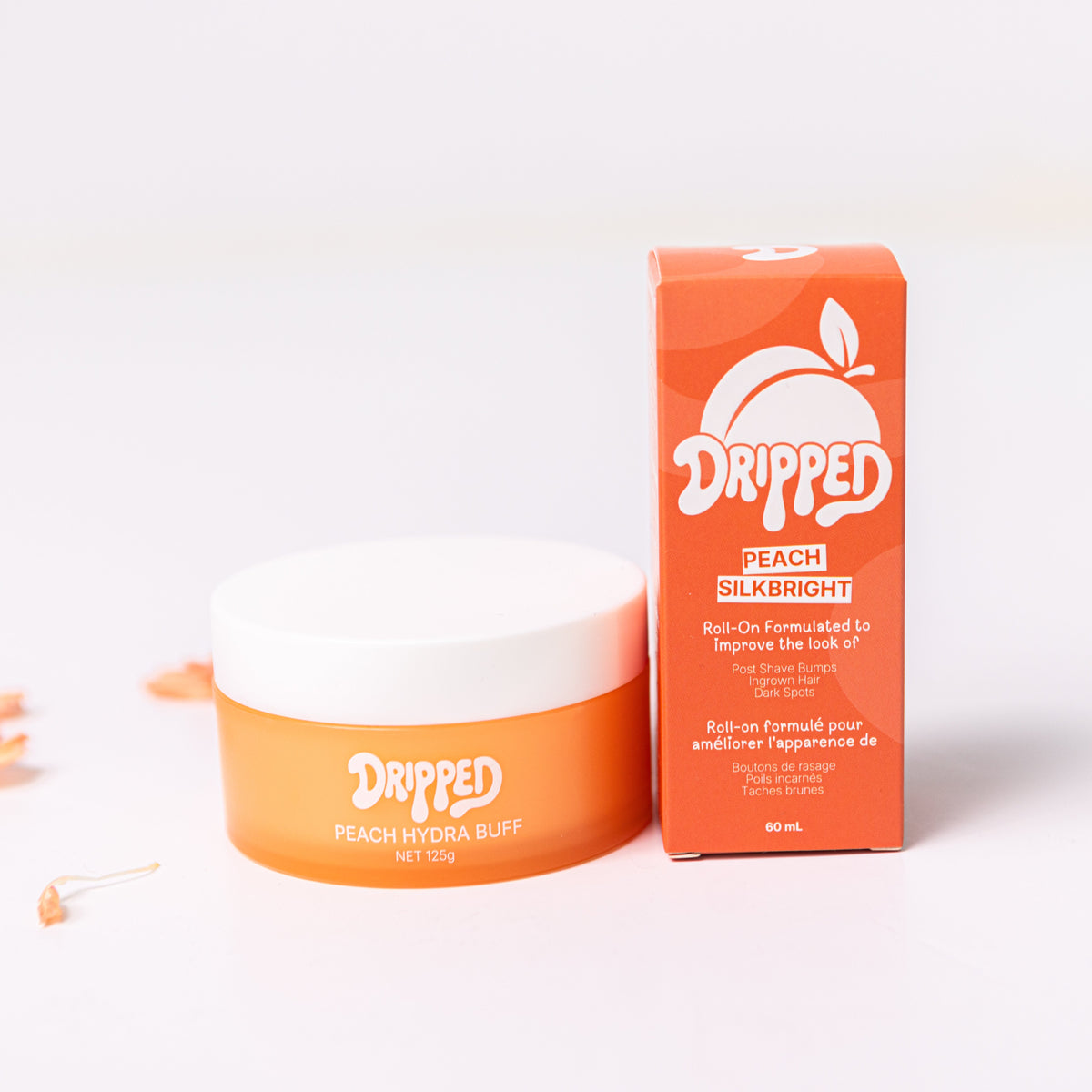
For post-wax skin specifically, product choice is critical. Scrubs formulated with coarser synthetic particles can create micro-tears on sensitized skin, so looking for finer, gentler mineral-based options makes a meaningful difference. The DRIPPED LABS Peach Hydra Buff is a dual-mineral body scrub designed for post-wax use: gentle enough for sensitized skin, effective enough to prevent buildup between appointments. For people who prefer chemical exfoliation, salicylic acid (a BHA) is well-suited for ingrown-prone areas because it penetrates into the follicle rather than only polishing the surface. Both approaches work; the key is using them gently and at the right point in your waxing cycle.
Hydration is equally non-negotiable. When skin is dehydrated, the surface layer becomes dense and tight, making it harder for hair to push through cleanly. Daily moisturization with a body oil or hydrating lotion that absorbs without clogging pores keeps skin supple through the full regrowth window. The DRIPPED LABS Glow Body Oil delivers lightweight hydration with a high-shine finish and absorbs quickly enough for daily wear. Supple skin gives new hair a cleaner exit, combined exfoliation and regular moisturization addresses both dead-skin buildup and dryness in a way that neither step achieves on its own.
Before your next wax appointment, one gentle exfoliation session 24 to 48 hours prior helps lift dead skin so hair sits closer to the surface and extraction is cleaner. Exfoliating the same day as your wax can over-sensitize the skin before treatment, so build that buffer in.
Safe ways to treat an ingrown hair at home
Apply a warm compress first
Start with a warm, damp compress held over the bump for 10 to 15 minutes. Repeat this three to four times daily for the first day or two. The warmth softens the skin and widens the follicle opening, giving the trapped hair a chance to work its way toward the surface without any forcing. If the bump is still hot or swollen, prioritize the compress and hold off on any physical exfoliation until the area calms down.
Follow with gentle exfoliation and topicals
Once tenderness reduces, gentle circular exfoliation with a soft washcloth or mild scrub can help coax the hair upward. Over-the-counter 1% hydrocortisone cream reduces redness and swelling when applied to the bump; standard dermatological guidelines recommend no more than four consecutive weeks of use. Salicylic acid and glycolic acid products provide chemical exfoliation that can free a trapped hair without the friction of scrubbing, making them well-suited for mild, non-infected bumps. Discontinue either immediately if stinging or worsening occurs.
Never pick, squeeze, or dig at an ingrown hair. Breaking the skin introduces bacteria into an already-irritated follicle and significantly raises the risk of infection, post-inflammatory hyperpigmentation, and scarring. If a hair loop is clearly visible above the skin surface, you can lift it gently with a clean, sterilized pair of tweezers, but don't break the skin to reach it. Stop all hair removal in the area until the bump fully resolves.
When to see a clinician
Knowing when home ingrown hair treatment has run its course is just as important as the treatment itself. Seek in-person care if you notice any of the following:
- Increasing pain or warmth spreading beyond the bump
- Visible pus or foul-smelling drainage
- A deep, soft lump that feels like a fluid-filled pocket
- Red streaking radiating outward from the site
- A bump that keeps enlarging or hasn't improved after two weeks
Signs your ingrown hair has become something more serious
A typical ingrown hair causes localized redness, mild tenderness, and a small raised bump. Fever, chills, swollen lymph nodes, or feeling systemically unwell alongside a bump suggest that infection may be spreading beyond the follicle. See a clinician promptly rather than continuing home treatment. People with diabetes or compromised immune function should seek care earlier, particularly when the bump is in the groin, armpit, or face, where deeper infection complications are more likely.
Recurrent ingrown hairs in the same location with scarring, tunnel-like tracks, or repeated flares are not a simple aftercare problem. That pattern can indicate hidradenitis suppurativa rather than a classic ingrown hair, and it requires a dermatologist's assessment, not another scrub routine. Knowing the difference between a manageable bump and a clinical condition is part of responsible aftercare.
It's also worth understanding the distinction between an ingrown hair and folliculitis. An ingrown hair is usually a single localized bump with a visible trapped hair under the skin. Folliculitis often presents as clusters of small red or pus-filled bumps across multiple follicles, spreads to nearby areas more readily, and is more likely to itch and expand. If you're seeing multiple pustules rather than one identifiable bump, get it assessed rather than treating it as a simple ingrown hair.
Building a post-wax routine that keeps skin consistently clear
A repeatable routine removes the guesswork. In the first 48 hours after waxing: skip exfoliation, avoid tight clothing over the waxed area, and keep heavily fragranced products off sensitized skin. Keep the area clean and apply a lightweight, gentle moisturizer or body oil to maintain hydration without clogging freshly opened follicles.
Starting on day two, introduce gentle exfoliation every few days and apply a hydrating body oil or moisturizer daily. Wear loose clothing in areas prone to friction. Maintaining this pattern through the full regrowth cycle can meaningfully reduce the conditions that trap emerging hairs. The night before your next wax, do one gentle exfoliation session to clear the path.
DRIPPED LABS was formulated around how waxed skin actually behaves, from the Peach Hydra Buff dual-mineral scrub that keeps follicle pathways clear without stripping sensitized skin, to the Glow Body Oil that maintains suppleness through the full regrowth window. Whether you're a licensed esthetician building a retail aftercare protocol or an at-home waxer after professional-level results, a line designed for the waxing skin cycle makes a practical difference between recurring razor bumps and consistently smooth skin.
Smooth skin is a system, not luck
Ingrown hair is predictable, and because it's predictable, it's manageable. The biology is consistent: blocked follicles, hair that can't exit cleanly, and skin that isn't conditioned to let it through. How to prevent ingrown hairs follows the same logic: timed exfoliation, daily hydration, and products formulated for the waxing skin cycle rather than generic body care.
When ingrown hair treatment is needed, keep it gentle and deliberate. Warm compresses, mild exfoliation, and over-the-counter topical options handle most cases. Knowing the red flags of infection is as important as the prevention routine itself, catching a worsening bump early protects you from a much harder recovery.
Explore the DRIPPED LABS aftercare collection to find tools built specifically for this routine. The Peach Hydra Buff and Glow Body Oil are a practical starting point, and the Peach Smooth Skin Starter Pack bundles the essentials for anyone building a post-wax routine from scratch. Smooth, bump-free skin doesn't happen by chance. It happens when your aftercare actually matches what your skin is doing, and that's exactly what this ingrown hair treatment and prevention approach is designed to deliver.